Friday, 14 August 2026

A shortlisting

It was a pleasant surprise to receive an email recently telling me I'd been shortlisted in a competition. That's as far as I got, and that's fine, but there was only one winner - no second or third place. Nothing on the organiser's website listing those five short-listees. Just the winner.

Neither was there a longlist. 

Now that might sound like sour grapes, and maybe it is one small sour grape, but I've organised several writing competitions and insist on publishing a longlist, as well as a shortlist. There will be three top placements and if the judge is so inclined maybe some Highly Commended slots too. Once judging is complete we display the listed authors' names too.

In the most recent competition I organised, I received an email from an entrant who'd made the longlist but not the short. However, she was thrilled because this was the first short story she'd submitted to a competition. It validated her work and encouraged her to continue submitting.

One competition that ran for some time but is now sadly defunct even published a 'just missed the longlist' list too. I was in that list once which was validating especially as this competition received a high number of entries.

For competitions that attract emerging writers, as many do, it's heartening to know that your hard work has been read, appreciated and considered worthy to be in the top twenty or thirty entries.

I've posted about this before but here I go again, another downside for me is those competitions who inform only the short-listees, leaving the rest to assume they've been unsuccessful. One competition where I was in the unsuccessful category did not publish the winners for some time after the apparent date they said the judging would be complete. I had another competition lined up for that story if it wasn't selected but didn't want to risk my entry fee in case I was still in the running, so I missed the second comp's deadline. I certainly won't be entering that one next time!

I'm not keen on those competitions who don't tell you who's judging it either, although I entered a couple recently including the one in my opening paragraph. If I'd known who the judge was, I wouldn't have entered. I'll be keeping my eye on competitions, but I now have a much stricter set of rules they must follow to gain my entry fee.


Saturday, 9 May 2026

A visit to Labassa Mansion

Celebrated 7 years in Melbourne with a quick visit to Labassa Mansion for a talk about historical clothing.

This dress belonged to a 14 year old immigrant from Scotland in mid 1850s. Made of wool, its all handstitched (very neatly.) Decorative walnut buttons on the front and pockets! This has never been washed and is in pretty immaculate condition - just two patches of slight damage.


This dress on the right dates from 1879. Machine stitched finely striped green and white silk, complete with bustle, it was made for Miss Eliza Lawson of Warrnambool, for the occasion of her 10th birthday. It does have some spots on it though, analysed to be rouge (!) ink and something sugary.


Saturday, 7 December 2024

Ten Favourite Books of 2024

December has arrived yet again! 

To my surprise I found I'd read only 52 books this year but it's been a much busier year than I anticipated in January as I took over the presidency of The Society of Women Writers Victoria the following month.

Needless to say there is a huge pile of Waiting To Be Read books on my shelves.

If I add in the books I read to my granddaughters, then I could claim several hundred more as we get through several in a session! They thought this pile was suitable for one bedtime. 

From my reading, my favourites are the following - in no particular order. As always, I'm choosing from books published at any time.

Susan Hurley: Eight Lives. Library loan. A twisty turning mystery to uncover the issue of responsibility for the death of a scientist who is developing a new drug and dies after testing it on himself.  

Tom Rob Smith: Cold People. Library loan. Not my usual sort of choice but a page turner with huge ethical implications about the manipulation of genetics. And would you decide to escape death by living in Antarctica when the alternative is staying put and being eliminated in a month's time!

Gabbi Stroud: The Things That Matter Most. Purchase from local bookshop. Just how far do teachers' responsibilities go toward their pupils?

Alli Parker: At The Foot of The Cherry Tree. Bought at an author event. Of course I wasn't going to buy another book but Alli figuratively and literally sold it to me. The true story of her grandparents, Australian Harry and Japanese Cherry who meet in post-war Japan. Will Harry be able to bring his bride back to Australia?

Kristin Hannah: The Nightingale. On my bookshelf for some time - from a community bookshelf. Isabelle becomes a leader in the French resistance, helping allied airmen escape capture. Family issues complicate her work.

Sue Williams: That Bligh Girl. Bought at discount book shop. The story of Mary Bligh, daughter of William Bligh (yes, that one) when he was Governor of New South Wales in the early 1800s.

Kylie Orr: The Eleventh Floor. Bought at author talk. A new mother checks into a hotel alone for a decent night's sleep. She witnesses something alarming but cannot tell the police because there are serious implications for her if she does. How much responsibility does she have for what happened that night?

Annie Buist and Graeme Simsion: The Glass House. Bought at discount bookshop. Set in a psychiatric hospital we follow the lives of staff members over the course of several patient admissions. 
My daughter who is a mental health nurse vouches for its accuracy. The sequel is out soon!

Christian White: The Wife and the Widow. From my TBR pile - second-hand. Two murders in as a small Australian Island. Is there a link?

Lianne Moriarty: Here One Moment. Bought at discount bookshop. A woman on a delayed flight begins telling passengers the cause and their age at their deaths. Is she misguided but harmless or could there be some truth in her predictions? A thought-provoking read.


Friday, 25 October 2024

Flowers

I came home from the last meeting of the Society Of Women Writers Victoria with these two beauties. 

A bunch of native flowers and the ninth anthology from the society.

The stories, poems and non-fiction pieces are all by our members plus the four winning stories from our recent short story competition. The cover was designed by a member from one of her original paintings. 


Thursday, 12 September 2024

The Dickens Twist

Quite a few pieces of my writing have been inspired by people I met through my work. My piece 'A Girl Can Dream' published in Yours magazine was fiction but inspired by two real people whose names I chose to keep. The title was not of my choosing! The real Cathy would probably have laughed, and - providing she'd had a vodka and orange which she rightly maintained helped her speech become clearer - agreed the original title was better.

Another recently published flash, 'A Rose Petal Falls' was not inspired by an actual person but the fact that occasionally elderly people in our care, died with no-one to mourn them. Our unit manager would attend their funerals and often be the only mourner. 

'27th January 1995' is a part fiction / part truth flash as a tribute to a modest man who, on the 50th anniversary of the liberation of Auschwitz, quiety mentioned he had been held there. 

There is also a piece about an actor who filmed part of an episode of a long running police drama series on the farm where I lived when I was twelve. Fifty years later we met again when he presented at my clinic with a minor voice problem. At the end of our second session, I felt he would not mind my mentioning our first meeting and described the scene he'd filmed as an undercover cop. 

'Good lord,' he said. 'I was dressed as a hippie wearing a yellow shirt, wasn't I.'  He certainly was - my twelve year old self had thought he looked rather wonderful (I didn't tell him that bit.) I was amazed that he could remember part of a single episode when he'd filmed goodness knows how many in his long career.

The latest piece soon to be published is from two separate and very different patients both of whom stood out in my memory. I spotted a callout for pieces about working life for an anthology and dusted off a piece my writing group had read, spruced it up and sent it off, with no real expectation of it being selected. To my delight it was and this time the editor's suggested title, 'The Dickens Twist' is much better than mine! Is This Working will be launched in Brisbane on September 21st 2024.


Wednesday, 29 May 2024

It's been rather a long time....


Yes, it's been ages since I posted here. I've been pretty busy. 

At the beginning of the year the committee of the Society of Women Writers Victoria began its work as usual after the Christmas break ready for the first meeting of the year in February. Then our president stepped down which left rather a gap. And I stepped up! So here I am, the Interim President until the AGM later this year. I felt a bit like a politician who takes over mid-term. But one thing I can promise, I'll do a better job than the UK Prime Minister who was in the role for a mere 44 days. To be fair she didn't set the bar very high so I'm not promising the impossible.

As well as undertaking lots of governance issues, which thankfully another committee member (also called Lindsay) understands far better than I do, we have just run a short story competition, have undertaken a member survey and are planning not only our regular monthly meetings but some additional ones too. So there's a fair bit going on as well as the admin that goes with changes of office. 

Needless to say I haven't done as much writing as I'd like, but was pleased to have two acceptances to Australian anthologies, Older (Bequem Publishing) and Is This Working (Tiny Owl Workshop) to be published later this year. A small prompted piece was showcased in the most recent Furious Fiction competition - 55 hours to write up to 500 words. Mine was done in less than five hours as inevitably the timing coincided with others matters requiring attention. Yes, there have been rejections too, but there's no point dwelling too much on those. 

I have been focusing on a family story. It started out as a single short story but the members of my writing group (within SWWV) suggested I expand it so the episodes keep coming. This means lots of research as it's set in the early years of the 19th century and is set in England and Australia. 

I've attended some good local author events too - including Alice Pung and Kylie Orr - there's never a shortage of bookish events here in Melbourne. And of course there are plenty of great books to read. 

So that's my 2024 so far. Hopefully it won't be six months before my next post. 


Wednesday, 20 December 2023

This year's favourite books.

The end of year book lists are ubiquitous - I often wonder whether those by literary figures really do feature the books they liked the most or ones they want the public to think they liked the most because their lists always feature books that have won lots of acclaim. But many good books don't get much of a look in!

My year's reading has been good - I've read 61 books
with only one prize-winning novel abandoned as I couldn't stand the characters. This has been my reason for giving up on several books - they've been well-written and have often won prizes or the acclaim I mentioned above but the characters are just so annoying I don't care what happens to them. 

I'm perfectly able to like books with irritating or unlikable characters because something else is at stake and that keeps me reading. Just like life, sometimes we bear with people who annoy us because there is a reason to persist but if there is no upside why keep them in your life? 

Anyway here is my list and because I don't mind if people don't consider me a literary force, I have chosen the books I enjoyed the most - not all from this year - and yes, some are those major prize winners! Of course there are loads of excellent books that I haven't read yet (some of which, I'm sure, are on my TBR pile.)

Thanks to library loans, community book shelves, gifts and purchases, here is my top ten in no particular order.:

Shankari Chandran: Chai Time at Cinnamon Gardens (independent bookshop purchase)

Vicki Petratis: The Unbelieved (bought at author event)

Bonnie Garmus: Lessons In Chemistry (online purchase)

Barbara Kingsolver: Demon Copperhead (independent bookshop purchase)

Celeste Ng: Our Missing Hearts (library loan)

Toni Jordan: Prettier if She Smiled More (chain bookshop purchase)

Lisa Genova: Left Neglected (op shop purchase)

Pip Williams: The Bookbinder of Jericho (chain bookshop purchase)

Christian White: The Nowhere Child (gift)

Kerryn Mayne: Lenny Marks Gets Away With Murder (library loan)

Sunday, 26 November 2023

In Praise of Postcards

My mother had an extensive collection of 'tourist' postcards stuck on one wall of her kitchen - with five children and eight grandchildren who all travelled it was a worthy collection boasting pictures from numerous countries as well as UK. 

When she left her flat for a residential home many of our postcards were returned to us if we wanted them so I have my cards from Mongolia and Timbuktu among others. 

I always liked receiving postcards from friends and family on holiday and I used many cards of iconic views in my speech therapy work with people with aphasia making interesting naming activities and stimulating conversation. 

I recall a collection of old postcards in the attic of the farmhouse where I grew up mostly addressed to the previous resident before her marriage. The messages weren't from holiday makers but were used as a quick way of sending notes in the pre-telephone era when there were up to four deliveries a day including an evening delivery. A local card could be posted and delivered on the same day.  One of my sisters rescued some of them and the messages are a mixture of banal and intriguing. 

This one dated 15th November 1914, says "This is some of the wounded I saw at Southend, Our Police Court Case came off this week. I am so glad it is over, although it is always in my thoughts. 20 months hard labour for each. Much love, Ida."  One can only wonder.

Another of my postcard collections is my art cards. A regular visitor to art galleries since my teens I always purchase a few of my favorite or particularly interesting pictures and some I have received from friends. One such card of a Waterhouse simply reads, 'We must do this again, J.' To my shame I have no recollection of J or indeed what we did or whether we ever did it again! Perhaps it was a visit to the Tate but I really don't recall visiting with a J. (I do recall visiting with a witty R and a rather tedious R and an M who kept making stupid comments which I was only able to turn off by visiting the cafe like the French and Saunders sketch.)

My travel card collection hasn't grown lately as people don't seem to send cards from their travels any more and many aren't travelling so much nowadays so receiving cards is infrequent - or was until I discovered PostCrossing 

This world-wide organization allows you to sign up with your address and a few details about yourself including languages in which you can communicate. You are assigned a person to whom you send a card. When it is received and registered on the site your name will be assigned to someone so for every card you send, you receive one. Over 74 million cards have been sent through the scheme.

This is a world-wide scheme but you are limited by language – English is of course a world language which is an advantage. Cost is something to bear in mind. Some PostCrossers have sent thousands of cards – perhaps their postage is cheaper or they think of it as a hobby worth the cost.

So far, I’ve sent and or received cards from 33 countries. One to USA, one to Slovakia and one to Thailand have gone astray but sometimes they do turn up eventually. I received one from China that took 84 days and one I sent to China arrived after 111 days. I wonder where the missing cards  are lurking!

On my profile I mentioned liking art cards and several of those sent to me are cards of artworks, some of which I knew while others have added to my education.

Further reading:

Two books detailing postcards dating from around 1911 and the stories behind them.

Posted on the Past & Second Delivery by Helen Bagott. 

A book about the history of postcard published in USA: Postcards The Rise and Fall of the World’s First Social Network by Lydia Pynel

Sunday, 24 September 2023

 Cuckoo in The Nest:   Fran Hill.     

Narrated by fourteen-year-old Jackie, Cuckoo in the Nest is the story of Jackie, an aspiring poet who is wiser beyond her years. She’s had to be since her mum died and her father slid into alcoholism alternating between violence and helplessness. Jackie has kept the pair of them going but when the authorities eventually step in, she is fostered by Nick and Bridget Wall whose daughter Amanda does not welcome the newcomer.

 Set in Britain’s heatwave summer of 1976, there are plenty of cultural references including music for those of us who remember this era, and setting the scene for those who don’t. (Gammon slices with pineapple sauce, anyone? Or a drive in a mustard-coloured Ford Escort?)

As Jackie negotiates her new situation, she is aware that her foster parents also have to find their way with the arrangement as much as she does herself. Amanda does too but without any consideration towards Jackie or, indeed, her parents.

Jackie gets through the days guarding her emotions carefully, but we see small snippets of her pain and vulnerability – always understated but saying so much. ‘It was about finding Carolines or perhaps Janes or Marions with my dad and wearing my mother’s silk dressing gown.’   

As the story unfolds, we see that Bridget is hanging onto her middle-class aspirations by her fingernails. How does she negotiate the minefield of a resentful teenager and the proverbial cuckoo in the nest when things go awry?

Jackie narrates her story with sardonic humour although occasionally I found this a little too adult for even a bright and precocious fourteen-year-old. However, it didn’t mar my enjoyment of reading.

This story is fiction but Cuckoo in The Nest is informed by the author’s own experience of living with a foster family, giving it authenticity and allowing the reader insights into the experiences of children in the care system and perhaps breaking down preconceived ideas about children in care.   


Thursday, 11 May 2023

My First Post in Ages

St Kilda
I've just passed my fourth anniversary of my move to Australia so thought I should update this blog. I haven't been posting because there hasn't been a great deal of writerly news. I've been busy but not achieving much to shout about.

Back in March I enjoyed presenting a talk about older women in fiction, or rather the lack of them, to a small group who tuned in on Zoom for my IWWGs Women's History Month event. I read one of my stories about Lorna aged 64 (which also features the pier in the picture) which went down well. I also raised the issue of how women of all ages have typically been missing from history books.

Older women are in novels, although they are massively under-represented - but it's how they're portrayed that interests me and often bothers me. Do we lump all 'older' women in one group like so many tick boxes on forms where there's one last box: 60+ - as if a 60 year old is the same as a 99 year old or a 109 year old. Many portrayals are somewhat negative. The film industry seems to have taken to older women, providing of course they are Botoxed, glamorous and extremely wealthy. They don't seem to have have aching joints like many real older women do, but tear around like teenagers which I find equally irritating. 

If you're interested in older women in fiction do check out BookWord that shows a variety of books with older women in them, although not all are positive portrayals.

Then there is the matter of older writers and especially older women getting published. Again, there has been some improvement lately and I welcomed the article published by The Guardian not long ago which you can read here. More recently of course is the good news of the competition from Jenny Brown Associates Literary agents for novelists over 50 here. It's open only to UK residents so I am not eligible but I'd have definitely submitted otherwise. I look forward to hearing the results.

What of my own writing this year? Not much, I'm afraid. I pitched my novel and did get a call for the first three chapters, synopsis etc but alas it got no further. 

I've had three small pieces published online including Much Time Has Passed and have been longlisted in a Brilliant Flash Fiction competition. 

There have been plenty of rejections as always. Some disappoint but most roll off the proverbial duck's back. They should as I've had enough since my first rejection in 2005. 

To date I've made 367 submissions to competitions, journals and magazines. 74 were accepted and published online or on paper plus 20 competition long-listings or short-listings. If I add those in to the success mix, my very poor mathematical skills make that around a 25% success rate or a 75% not success rate. 

I'll keep going though.

Saturday, 21 January 2023

Every Family Has a Story


My story of my grandmother was included in this publication from Family History ACT. The 110 stories it contains are from those entered into their 2021 competition.

The book is full of fascinating narratives about ordinary - and sometimes extraordinary - people whose lives have not made headlines or been included in standard historical records but greatly add to our understanding of the past. 

I wrote my story as I believe such accounts are important to those who come after - so much gets lost through verbal retellings as I have mentioned on this blog before

There is no doubt that researching our ancestors' lives has been made much easier by the online websites such as Ancestry. One of my sisters did a great deal of research that has added to our family story, and has partially resolved one mystery. But as some  questions are answered, new questions arise.

My story.

Accessing some of the public family trees featuring various of my ancestors also shows that there are many mistakes made by other researchers, muddling names, dates and so on. Some errors have no doubt arisen because deciphering the handwritten records is difficult, others because of families tending to use the same forenames - sometimes a child born after a sibling has died was given the same name. The spelling by recording clerks was often inaccurate too. Family legend had it that my great-aunt was named Lilian Lucy Helen but the person who registered her birth was not very articulate and the clerk wrote Ellen instead of Helen. Records confirm this!

But research is fascinating and my own dabbling on sites such as Ancestry and Trove digitalised newspapers has given me some small gems which I've added to our family archive. It also pointed to more of my great-great-grandmother's family members emigrating to Australia in the nineteenth century than we previously knew about. I wish I knew their stories too.

Thursday, 29 December 2022

Books I Enjoyed This Year

Book lists are ubiquitous but mine aren't lists of best-sellers - although one or two may feature. They aren't prize winning lists, although maybe a couple of titles are on those lists too. They aren't only books published this year, although some may be.  

This year I've read 77 books, most of which I've enjoyed. I select books not necessarily because I consider them to be the best written but because they're the ones I have most enjoyed reading. Those that have given me food for thought, pleasure, education and, in several cases, the delight of something refreshingly different. 

The books I've read this year have taken me to a number of different locations in the UK, USA and Australia plus Ireland, Sweden, Mustique, Guyana, Spain, Botswana, Zimbabwe, India, Crete, Hungary, Germany and New Zealand. I've been back and forward in time!

I couldn't decide on a Top Ten so it's a Top Twelve in no particular order.


Femlandia - Christina Dalcher. The author's third dystopian novel.  Like all in this genre, it is not so far-fetched as we might initially think. Thought provoking to say the least.

Still Life - Sarah Winman. I found this book of unlikely friendships compelling and delightful. It's also a love letter to the city of Florence.

Remember Me - Charity Norman. The story of a daughter and father and learning the truth of a twenty-five year old mystery. Sad and beautiful to read.

The Secrets of Elephants - Vasundra Tailor. A story of three generations of a family spanning two continents with courage at the story's heart. 

Dinner With the Schnabels - Toni Jordan. Funny but examining difficult issues with a few twists along the way.
 
Bila Yarrudhanggalangdhuray - Anita Heiss. An historical novel on displacement and the clash of cultures between Wiradjuri people and white settlers. 

Small Pleasures - Clare Chambers. Capturing the 50s beautifully, as well as the character of Jean who feel life has passed her by, the story revolves round a real article about parthenogenesis and a woman's belief that she had a virgin birth. 

The Crimson Thread - Kate Forsyth. A wartime novel focusing on bravery of locals and hidden soldiers during Nazi occupation of Crete.

The Giver of Stars - Jojo Moyes. Women of the packhorse library on East Kentucky in late 30s. Female friendship and resilience. 

The Dressmakers of Yarrandarrah Prison - Meredith Jaffe. Quirky and feelgood. 

Once Upon A Camino - Matthew S Wilson. Tom's pilgrimage on the Camino Santiago takes the reader on an adventure as surprising as Tom's.

After Story - Larissa Behrendt. After grief and trauma comes healing and understanding. Plus a literary tour of the UK and stories of one of the oldest story-telling cultures of the world.


Sunday, 2 October 2022

Books by Friends

At the book chatters group at my local library, where we talk about and discuss books we have liked, or sometimes not liked, I mentioned that I'd recently enjoyed two books written by friends.

Then it struck me that I hadn't met either of them in person but only via the Internet. But writers groups are generally friendly places and are supportive of each other, enjoying each others' success so it feels as if members are, indeed, friends. 

The important things though are the books in question. The first was Matthew S. Wilson's Once Upon A Camino.

During the many Melbourne lockdowns during the first two years of Covid-19, writers came to together via Zoom courtesy of Writers Victoria and its host Noè Harsel twice a week. Participants wrote for 25 minutes. Some used Noè's prompts, others did their own thing. We didn't listen or critique each other's work but several of us would chat for a few minutes afterwards. 

Matthew joined on as many Tuesdays and Fridays as he could to complete his novel and get it published. 

I read it soon after it was published. I knew the protagonist, Tom, walked the Camino de Santiago, as Matthew had done some years before, and was doing it to prove his love for his girlfriend to her grandfather. I knew Tom lost his luggage at the beginning of the journey. What I didn't know was that my journey as a reader would be as unexpected as Tom found his walking adventure. I rate books by their un-put-down-ability and this was one I raced through to keep up with its narrative pace. Well worth the  read!


The second book wasn't entirely new to me as I had been a beta reader for Vasundra Tailor, a member of my former North London writing Group Greenacre Writers, although Vasundra joined after I had left. When I heard she was seeking readers for her manuscript set in India and Zimbabwe I couldn't resist as I love books set in different countries to my native UK.  

I thoroughly enjoyed reading the manuscript and felt she definitely had a novel worthy of publication. But we all know the path to that doesn't always run smoothly so I was delighted when she announced she had a publishing contract and later, Vasundra kindly sent me a copy. 

Reading The Secret of Elephants felt like meeting up with old friends. A family story spanning three generations and two countries, I enjoyed the re-read of this story of uncovering family secrets and finding courage. I'm thinking of suggesting a sequel!

Thank you writerly friends for giving me two highly enjoyable reads.


Follow the authors on Twitter:

Matthew S. Wilson @Matthew_SWilson  Once Upon A Camino

Vasundra Tailor @vasundrajay The Secret of Elephants


Thursday, 23 June 2022

Mentone Public Library - the Story of a Tiny Library in Mentone

Tucked away in the Melbourne suburb of Mentone is a library.

When I arrived in Australia to live, my first priority was to buy a home and the second to join my nearest library. The previous year when staying with my daughter, I'd seen a sign to Mentone Library but couldn't locate it! I searched on the Kingston website and found plenty of libraries including those at nearby Cheltenham and Parkdale but no mention of Mentone. I guessed it had been closed like so many of the libraries in my native UK. My then local library in North London had been drastically reduced in size and hundreds of others in UK closed in spite of over-whelming public protest. 

But once settled (and now a holder of a Kingston Libraries card) a little more investigation found I was wrong. Mentone Library was alive and well, albeit by now sleeping during Covid lockdowns.

You won’t find it on the Kingston library website because it’s an independent public library.

On 14th May 2022 it celebrated its 97th birthday. In its newly painted interior, a number of us gathered around its brand-new tables amidst the bookshelves lining the walls and read aloud short pieces of our writing. Some were published authors, others still dabbling and some yet to commit to calling themselves a writer; all were made welcome. 

Established in 1925­ – making it the longest surviving community library in Melbourne’s City of Kingston – Mentone Library has always been staffed entirely by volunteers. Not only lending books, the library’s mission is to encourage literary discussion, promote local authors and community events. Current plans include establishing a writers’ centre.

I learned about its history from the City of Kingston’s Local History website in an article by Grahame J Whitehead. Mentone had a library in 1890 consisting of three room in the Skating Rink with a selection of 300 books and newspapers. Later, the books transferred to an estate agency as the rink’s room closed in winter. Lack of council funding and support led the people of Mentone to set about raising funds to establish their own library building. To raise money, they held a garden fete to be opened by the governor of Victoria, Sir John Fuller. He spoke of the importance of education and reading but, he warned, there were also many books, the trashy shilling shockers, which if read, left the reader worse for having read them. He hoped the good people of Mentone would avoid such nonsense. In spite of their endeavours the library closed down in 1924. Perhaps because those good people read too many shilling shockers.

A few months later a group of twenty-five people met with the aim of establishing a new library and on May 6th 1925 a temporary library opened in the rooms of the Rifle Range in Brindisi Street. It boasted 120 subscribers who could borrow any of their 550 books.

After the first ten years 175,000 books had been exchanged, with the stock now numbering 4,500.

The library moved home to a room in the council chambers in 1955, a time when the establishment of a new free municipal public library was under discussion eventually resulting in the library at Parkdale. The Mentone library was struggling and once again moved home, this time to a large container in the recreation ground. Another couple of moves found the library eventually settling into a room to the rear of the Citizen’s Advice Bureau in Florence Street in 1997 which is still its home today and where I made my first visit.

Today the shelves are packed with around 3,500 books bought with library funds and grants from Kingston City council, a great supporter of the library, and donations from members and other benefactors. From its inception as the only library in the area almost a hundred years ago Mentone Library is now sandwiched between well-stocked free public libraries so this little library needed to rethink its position. The committee is repurposing it as a writers’ centre and in keeping with that aim, its library stock will focus on books about the locale, whether histories, memoirs or fiction as well as books by local authors.

The volunteers kept events going during pandemic lockdowns by transferring to Zoom and they took advantage of the library’s closure to smarten it up but it remains a delightful combination of old and new.

The volunteers continue to be its life support as it is they who enable the library to open to the public. Currently this is for a two-hour slot from Monday to Friday10.00am-12.00 noon. More volunteers are needed to help expand the opening hours.

You may join as a member for $10 a year simply by applying at the library or emailing and bank transfer. If you’d like to receive the newsletter, email your request.

The committee is planning further events including open mic events and the library space will be available for hire for writerly endeavours, whether a short course or for a writing group’s regular meeting.

For more information and upcoming events see:

https://www.facebook.com/MPLWritersCentre

https://mentonepubliclibrary.blogspot.com/

Email: mentonepubliclibrary@gmail.com

MPL is to be found at the rear of the Information Bureau, 36 Florence Street, Mentone, Vic 3194. Plenty of parking in the Coles carpark adjacent. Walkable from Mentone Station.


Friday, 22 April 2022

Examining the Past and Challenging the Future.

Perhaps the reason one of my A' Levels was a grade too low was because I went out dancing the night before. Or maybe I'd not revised enough. Whatever, it meant I wouldn't get my place on the prestigious librarianship course unless I re-did the A level or worked in a library for a year. I duly applied to the central library in Bristol and was granted an interview just after my 18th birthday in October. I was offered the post and asked when I could start. 'Could it be January?' I asked. The chief librarian looked horrified so I quickly explained that I was currently working in a children's home and really wanted to be there for Christmas.  'I think you are not very serious about this position,' replied the librarian frostily to which I agreed that no, perhaps I wasn't. And there ended my potential career. 

Instead I went on to qualify as a Residential Child Care Officer which later led me to becoming a speech and language therapist. My choice on that day was something I've never regretted. And Christmas at the children's home was wonderful. I still have the card that 6 year-old Fred drew for me. A bright pink panther (Fred's favourite cartoon) with a speech bubble announcing 'Happy Chrismas from the Pink Panter' [sic] 

Since those far off days there has been a huge re-examining of children's homes in the recent past, many of which were full of abuse and did little or nothing to protect the children in their care. I trust none of those I worked in were guilty (I certainly never witnessed nor suspected any such behaviour.) I've always believed that abusing a position of trust is one of the worst crimes we can commit against fellow humans. I have happy memories of the children who were in my care but I've often wondered whether their memories are as positive. I hope some of their recollections are but making stable relationships with carers was always going to be hard as they were subjected to a series of people, however good, passing through their lives. And did we address all the needs and the concerns of the children on the matter of their identities? And how well prepared were those entering their adult years? Years on, with greater wisdom, I see there may well have been failures.

Like many people I've noticed how often the killer, especially serial killers, in books or TV programmes and films are orphans. (In reality relatively few children in care are orphans.) I'd assumed this wasn't so much that the writers believed orphans are evil, but that they couldn't be bothered to think up suitable reasons for why a child turns into an adult killer. If there is no family, parents or siblings, no-one needs to be held accountable for perhaps contributing in some way to those crimes. No backstory needs to be written - just some unnamed children's home. But much as I was aware of the unfairness of these portrayals, I didn't consider what that was like for people who are care-experienced. Josie Pearse writes a much more carefully considered article here.

When Rosie Canning - fellow founder of Greenacre Writers and The Finchley Literary Festival - began working on an examination of representations of care-experienced people in literature, partly to address  and challenge this issue, I suspect she didn't then realise how this theme would blossom into a number of other projects such as the UK/Australian Care Experience and Culture with Dr Dee Michell. 

Their recent online book club featuring representations of care in literature includes memoir and novels.

Sarah Hilary joined the first discussion with her book Fragile, a modern gothic novel telling the stories of two young people who were in the care system and their foster mother. 

The second event's speakers were Susan Francis from Australia and Anne Harrison from UK. I was already following Susan on Twitter but hadn't, at that point, read her book The Love That Remains. Anne Harrison and her memoir, Call Me Auntie, was at the time unknown to me. 

Both spoke so eloquently about their memoirs and the search for their birth parents, I knew I wanted to read them both. I had been lucky enough to win a copy of Call Me Auntie from the book club which was winging its way towards me, and I quickly ordered a copy of The Love That Remains which I dived into immediately I received it. 

The books are very different but have a great deal in common. At the core of each is the writer's need to know their identity. The 'Where did I come from?' Both authors, one adopted, and one initially fostered and then living in children's homes, set out to search for their roots. They search for their birth mothers to learn about their identity and in the hope of forging a relationship of some sort. Both find answers to some of their questions but many are left unanswered.

Both books are well written and enable to reader to follow the narratives easily. Anne Harrison's Call Me Auntie is a factual account; much of her early history is related using documents from her care file which was made available to her quite recently. This is not a 'misery lit' account by any means but some was hard to read. The treatment of the children in one care home was emotionally and physically abusive which made me feel very angry and the scenes with her birth mother filled me with sadness and dismay. 

Susan Francis's The Love That Remains tells of her need to discover the truth about her parents. Even though she was happily adopted, her unknown roots left her with insecurities. Here too, many scenes make for emotional reading. But Susan's need to search for the truth about the past doesn't stop with her birth parents. She discovers another awful secret which needs verification, and to be understood and accepted.

Ultimately, both books are journeys of courage and discovery and yet more courage. 

To follow these authors on Twitter:

Susan Francis @susanfranciswr1 

Anne Harrison @anne4harrison


Tuesday, 22 February 2022

A Competition for Competitions.

I've written about entering competitions before, whether to keep submitting a story or give up on it after a number of rejections or failing to hit a longlist. 


A blogpost from Lisa Kenway interested me and I had a few thoughts of my own on the subject. I've studied details of loads of competitions to see if I am eligible or have a possible entry. I've entered 28 competitions since the beginning of last year with a spectacular lack of success. I was longlisted in one of Australian Writing Centre's Furious Fictions but got nowhere in the other seven I entered. 

Six of the competitions are yet to be announced but apart from that longlisting the rest resulted in zilch. 

My gripe isn't my lack of success (much as I wish for it) but that some of the competitions did not give a set date when results would be announced and in the event did not let non-winning competitors (ie: me) know they had been announced. Some did not have long lists and in one case no shortlist - just three winners. Some gave an announcement date but failed to deliver any results by that date. 

The AWC Furious Fiction winners are announced on the day they say they will announce it. There is only one cash winner but there is a shortlist with stories published and a named longlist. They deliver what they promise. As do Lorraine Mace's Flash 500 competitions where all entrants are emailed to say the results are in.

I imagine the big well-known competitions also deliver long and short-lists and winners on time (I wouldn't know not having entered them) but some comps don't do well in this respect. No acknowledgement of entries and no announcements made well after the date advertised doesn't bode well. Has my entry and fee disappeared in to the ether? 

Having co-run three competitions for Greenacre Writers we did both in a timely fashion! Of course there can be delays for any amount of reasons, but let your entrants know! Because of delayed announcements, I've sometimes missed a deadline for a second competition in which I've intended to enter a story if it got nowhere in a previous comp. 

I've seen several competitions that didn't advertise who the judge will be. That may not be important to some but after something that happened in a Zoom creative writing event last year I decided not to enter a particular story in a competition I was considering because, unless all the other entries were all utterly dreadful, I knew it wouldn't be placed let alone win. 

This story had been shortlisted by readers in another competition the year before and passed to the judge. It wasn't placed. Fair enough. The Zoom writing event was conducted by the writer who had been the judge. After doing some writing exercises she talked about what wins competitions. She mentioned the usual suspects and then mentioned the comp I had entered and was very rude about the non-winning short-listed stories. 

She made a very negative comment about one entry that could well have been my story so when I learned she was to be the judge in this forthcoming competition there was no way I was going to pay a fee for it to be dismissed again. Had she made constructive comments, who knows, maybe I would have tweaked my story and entered. I disliked her dismissive attitude to the work put in by those shortlisted writers. We may not have been up to her standard but there was no need to be so rude. I'll be avoiding her from now on!

So I think it's time we had a competition for competitions. Which would be in your top three? 


Thursday, 23 December 2021

My favourite books of 2021

These 'best reads' lists are ubiquitous but I make no apology for adding to them. Mine isn't based on the books that I think might look good in my list, those prize winning tomes that pop up in so many literary top 10s. There will be some of course but sometimes I see books that have had great publicity but I thought nothing special and wonder whether people selecting them as their best reads really liked them! For me there's a difference between good reads and favourite reads. Some books, that I can see are worthy literary specimens, aren't necessarily ones I enjoyed reading although I appreciated their merit while others may not be brilliant literature but are thoroughly enjoyable. This list is about enjoyment. 

Owing to further lockdowns I read more books than most years - even beating last year but that was because last year's books included A Suitable Boy. I've read 74 so far this year with another couple to be added before the year is out.

Here are my favourites. 

The Dutch House - Ann Patchett. One of my out-of-last-year's-lockdown purchases.

Transcription - Kate Atkinson. A library loan because I've liked previous books of hers.

Winter in Tabriz - Shelia Llewellyn. A library loan picked simply because I've been to Tabriz. 

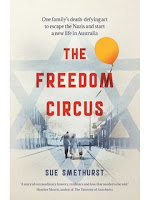
The Freedom Circus - Sue Smethurst. A non-fiction purchase after hearing Sue talk about it. 

Wimmera  - Mark Brandi, another library loan as I'd had this one recommended. 

Shuggie Bain - Douglas Stuart. A purchase, and while it hit my top reads, I did have to read another couple of frothy books at the same time because of the endless bleakness.

The White Girl - Tony Birch. Library loan because I'd heard good reports.

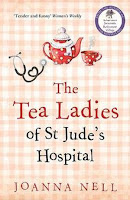
The Tea Ladies of St Jude's Hospital - Joanna Nell. A purchase because I love Joanna Nell's books.

The Vanishing Half - Brit Bennett. A loan from my local street bookshelf.

The School - Brendan James Murray. A non-fiction giveaway from the author which I wrote about here.

At The End of the Day - Liz Byrski. A click and collect lockdown purchase because I've enjoyed a number of her books. 


Friday, 12 November 2021

Inside Fictional Minds by Dr Stephanie Carty. A brief review.

 Inside Fictional Minds by Dr Stephanie Carty. Published by Ad Hoc Fiction, 2021. 

Available in UK from Ad Hoc Fiction (UK) 

Available in Australia from  Amazon


Dr Stephanie Carty is a consultant psychologist working in UK’s NHS and is also the writer of innovative flash fiction of whom I’ve seen many a mention because she keeps winning competitions and being published on flash fiction forums and in anthologies!

When she developed her online course, The Psychology of Character, I booked and found an interesting, fresh approach to writing our fictional characters. The book was developed from the course. It’s a slim volume, just 126 pages, but is packed with useful information.

We’ve all read stories with good and interesting characters who make a decision or do something that jars, without any explanation why they are acting so differently. Stephanie’s aim is to help writers create more realistic characters, still full of individual quirks and traits but whose behaviour and emotions follows a realistic pattern for that particular person.

This isn’t about abnormal psychology but everyday people, their beliefs, their values and how their emotional life
develops. For example, we can all think of times when we might feel anger but how it manifests can vary enormously from person to person depending on aspects of our personality, the values we hold and the behaviours we deem acceptable.

Drawing on well-known psychological theories, such as attachment theory, Stephanie explains them in a straight forward manner. She even uses certain pandemic behaviours, that we all heard about, in the section about characters’ internal rules which illustrates how the same behaviour might arise from very different internal rules or experiences.

Throughout the book Stephanie asks us questions about our characters and invites us to keep looking deeper. Throughout the book there are 123 questions divided into 48 sets of tasks.

For example, in one section we are given these example questions: How does your character view himself? What does it achieve for him to think this way? What would happen if he stopped thinking this about himself? And so on. Some questions ask us how it might affect the readers of our work if they knew more or less about our characters and their motivations. 

The final section of the book is the chapter on change. Writers are constantly exhorted to have their characters change some aspect of themselves or their thinking throughout the story to give a satisfactory story arc. Yet in reality, people often resist change and the questions in this section guide us in making this a realistic and believable process.

There is a useful Further Reading section with books and links to various websites with recent quality information if readers wish to find out more on particular subjects.

This is a book that can be read and worked through in sequence or it can be dipped in and out of. Personally, I’d recommend reading it through to get a good overview and then using the sections you feel are most the relevant to your characters. This book could also be the starting point of creating interesting new characters for stories you’ve yet to write.


Saturday, 9 October 2021

Books from Their Authors.

I love books! I buy them from bookshops (aiming for independent bookshops where I can) but sometimes from mainstream book shops and have found some gems in charity shops. I avoid one large online retailer but have occasionally resorted to it if I can find no other outlet. I borrow books from my local libraries, from our community book-swap and from friends.  

This year I have also been given books through social media book promotions by their authors. I've been lucky enough to receive three books this way. All very different, they all looked interesting. 


The first was the wonderful non fiction The School by Brendan James Murray which I wrote about here


Second was Violet's War by Rosemary J Kind. In the category of women's historical fiction, this is a well researched story set during WWI and focuses on the rise of women's football in UK at this time. The team in the book is fictional but was inspired by true events. 

Violet's husband enlists leaving her and their young son living with her parents-in-law. Now working on a munitions factory, Violet, whose brothers have always played games of football, enjoys teaching the basics to her son in his father's absence but when she becomes involved in coaching a women's team at the factory, the fear of her mother-in-law's disapproval conflicts with her love of the game. 

When the team is asked to play in a proper match to raise funds for the local hospital for wounded soldiers, Violet has to decide which is more important - behaving in the demure way that society has deemed for married women or doing something proactive that could ultimately help her husband and his fellow soldiers.

In chapters that alternate from Violet's story to that of her husband in the front line, each uses real headlines from the newspapers of the time along with verses of songs that were popular, lending further authenticity to the plot. 

Believable characters and a good plot tell us more then the simple story - it also highlights the restrictions placed on women at a time when they took on many of the roles of men who were away fighting but still had few rights themselves. The suffrage movement had not yet won universal votes for women in UK.

Set a hundred years later and 12,000 miles away from Violet's world we have Kate in Making March by Hayley Walsh. The book is written in the form of recently separated Kate's diary beginning on her 40th birthday on 1st February. She has a month before her friend's wedding where she is to be Maid of Honour. 

The bride is her dear friend and the groom is her ex's closest friend. To complicate matters the ex is now seeing the groom's sister, the woman with whom he cheated on Kate, so of course they'll be at the wedding. 

I'm pretty sure I'd have emigrated to avoid this scenario but Kate is made of sterner stuff. There was a great deal about Kate that I could identify with, but if she thinks she's old at 40, I can assure her, she's in for a hell of a shock over the next 25 years. 

Many of her diary entries echo what many women have thought and I can imagine sitting down with Kate to have a right old rant about a million different things, laughing all the while. By the end of our conversation, we'd both be feeling good and if everyone agreed with us, the world would be a more sensible place. I'd definitely emigrate to avoid the hens' cruise though.

Hayley promised me a lighthearted read which was exactly what I wanted after weeks of lockdown 6, and it didn't disappoint. Yes, it's frothy but I've always been partial to literary pudding  And for the record this one does win a prize for sheer fun.