Wednesday, 30 December 2015

My best reads of 2015

As with previous years, I have chosen the ten books I most enjoyed that I read during the year. They are not all recently published, as you will see. I base my decisions on enjoyment and what I gained from them as much as literary merit. I list them in the order I read them. They include books from well known established authors but also four debut novels.


The Girl with All the Gifts - Mike Carey

I never thought I would enjoy a book featuring zombies but this one is, I suspect, in a class of its own. Mike Carey came to Finchley Literary Festival where he talked about it and read extracts. He even got some of us reading a little of the screenplay. I can truly say I read the part of Miss Justineau. I can't understand why they didn't choose me for the film. (OK, yes, I can, and after all I didn't exactly read for the part of Miss J.)

The Memory of Love - Aminatta Forna

Borrowed from the library, this was a fascinating read and gave me some insight into the aftermath of the appalling civil war in Sierra Leone.

Still Alice - Lisa Genova

A hauntingly sad portrayal of early onset dementia. I recall many years ago when, as a fairly newly qualified speech and language therapist, I had to assess the language of a lady with E.O.D It was one of the saddest assessments I have ever had to carry out, witnessing her despair and desolation at knowing she was no longer able to communicate and be the person she was, a highly intelligent and educated head-teacher.

Gone Girl - Gillian Flynn

This one kept me turning the pages. Psychopaths come in all guises.

The Things we Have in Common - Tasha Kavanagh.

Another Finchley Literary Festival book. Tasha's book was understandably nominated for the Not the Booker Prize. A story of Yasmin, a teenager who is an outsider and has a crush on her class mate. Yasmin sets out to keep her safe from the man she assumes is a stalker and a danger. Is she right? Does she make a catastrophic mistake?

The Ship - Antonia Honeywell.

A third FLF book which was a most thought-provoking read. Lalla might be annoying but she is the only person to question the reason the selected 500 passengers are on the ship, and whether that reason is valid.

Tying Down the Lion - Joanna Campbell.

I loved this story of the Bishop family driving to Berlin in 1967. It's funny but has a very tender and serious aspect. Joanna's writing is so vibrant that I felt as if I was in the car with the Bishops. The era of 1967 is brilliantly evoked.

The Handmaid's Tale - Margaret Atwood.

I'm not sure how I managed not to read this book before, as it has, rightly, been lauded for the last 30 years. I'd read others of Atwood's but this one had escaped me. I'm glad I put that right.

A God in Ruins - Kate Atkinson

I read  Life After Life last year so was intrigued to read this, the companion book. I was not disappointed.

The Good Son - Paul McVeigh.

Also shortlisted for Not The Booker Prize, I'd read about Paul's debut novel on his blog as well as number of terrific reviews. I was attending the NTB event at Big Green Bookshop, so intended to buy a copy. After hearing Paul read an extract I was well and truly hooked. An original and authentic voice that took me there, to Belfast in the 80s, spending a troubled summer with Mickey - wanting him so very much to achieve what he hoped for.

Saturday, 19 December 2015

Rae's blog....

Thank you to Rae Stoltenkamp, who invited me to be a guest blogger, following in the lofty footsteps of Emily Benet.

I met Rae at the first writing group I attended, run by Stewart Permutt, where I found the standard of its members was scarily good. Rae was therefore one of the first people to hear my early writing efforts and along with the rest of the group gave critical feedback in a useful and supportive way. 

Rae has published several books: Rae's fiction as well as poetry.

Take a look at my post and all the others on her blog here: Rae Stoltenkamp.

Wednesday, 11 November 2015

Sapper Dorothy Lawrence.

Dorothy Lawrence
I wrote and presented this piece at Finchley Literary Festival 2014. The event took part in Friern Barnet Community Library which is situated over the road from the former Colney Hatch Hospital, later renamed Friern Hospital. It was a flagship Victorian asylum, housing up to 3,500 patients. It closed in 1993 after which it was converted into luxurious apartments.

This is the story of a patient who died there in 1964 - but 50 years earlier she had done something quite remarkable. This is her story. I thought today was a fitting day to post it.

My name is Dorothy Lawrence. I think it’s 1964. Living in Colney Hatch Hospital – the loony bin – makes it hard to keep track. I’ve been incarcerated for 39 years. The warders see me as a mad old woman, someone who’s done nothing. I doubt they’d believe my story. Will you?

It’s fifty years now since the war broke out. I wanted to be a war correspondent. I was making my way in journalism – yes that surprised you didn’t it, but I’d had articles published in The Times, so I approached the Fleet Street papers but they sneered "do you suppose we're going to send a woman out there when even our own war-correspondents can't get out for love or money."

Well, I’d be hanged if I wouldn’t prove them wrong: "I'll see what an ordinary English girl, without credentials or money can accomplish. If war correspondents can’t get out there, I will."

So the summer of ‘15 saw me cycling to the war zone 15 miles from Paris on a ramshackle contraption that cost £2 plus another £3 to get it over to France. I made it to a French base camp just as the mudguard fell off.

From there I headed for Paris where there were plenty of English soldiers. I saw a couple of khakis and just had that instinct they’d be the ones to help me. ‘Hello, boys,’ I said and soon we were chatting like old friends. When they heard my plan, bless them, they gave me all the help I needed.

They got me kitted in out in uniform complete with cap, badge, puttees the lot. Bit by bit they brought it to me disguised as parcels of washing. I’ll tell you something - men’s trousers weren’t made to fit women and of course there was the top half. I had to flatten that lot  by bandaging myself like an Egyptian Mummy. Then I added padding for muscles! I ended up looking rather stout, but like a stout boy.  They taught me how to walk like a man and to march.

As Pt Denis Smith
Later I got my hair cut in the military style and even got the barber to run the razor over my face to encourage bristles but none grew. I used diluted Condys fluid to make my skin look manly – but actually it just looked like dirt.

I looked like a boy but I had to have proof. Those lads did me proud and soon I had my identity. I was Private Denis Smith. No 175331 1st Leicestershire Regiment.

They even got me the paperwork to get me to Bethune. I travelled as a woman – wearing a hat to hide my short hair but I left my corsets behind!

It was meeting Sapper Tom Dun that made it happen though. After hearing my plan, he got me joined up – drafted into the Royal Engineers, complete with RE badge. We found a deserted cottage for me to hide in. As Tom went off I changed into my uniform – I was soon itching all over – no wonder, the place was alive with fleas.

The first night I discovered why the place was abandoned. It was under constant enemy bombardment. Tom smuggled some rations to me. The next evening remembering Tom’s exact instruction, I went under cover of darkness to the yard where the men gathered and mingled for the night shift. I was one of them. I helped lay mines in the trenches. Ten nights I did that - under fire 400 yards from the enemy front line. Sleeping poorly by day in the damp cottage didn’t do me much good though and the rheumatics soon began to affect me as did my irregular rations.

Fainting fits bring disgrace on the King’s uniform and I knew if I ended up in hospital my cover would be blown. I couldn’t risk it because my kahki accomplices would be at risk too. So I turned myself in.

I told them who I was and just didn’t say much about those khakis.

They arrested me of course – saying I was a spy. They interrogated me but eventually I managed to convince them I was no spy but an English woman. We spoke at cross purposes for a while because I didn’t know what they meant when they asked me if I was a camp follower. I’d said yes.

They were furious that a woman could penetrate that most masculine of worlds and I had to promise to write nothing of my experiences to the papers for the duration of the war at the risk of imprisonment. But the fact is, I was the only woman to serve on the front line in that terrible war.

Years later when I told my doctor about what had happened to me as a child, when I was a ward of a churchman, I wasn’t believed. And because he knew my story of the trenches, he knew I had been a most effective liar. My insistence decided my fate: men of God did not violate young girls. To say otherwise proves I must be mad so here I am, imprisoned in Colney Hatch, and here I will be until my death.

Dorothy was buried in a unmarked paupers' grave in New Southgate Cemetery.


Monday, 5 October 2015

Is There Enough Diversity in Literature? Part 2

As I grew into adulthood I continued to seek out books from and about other countries. I was especially drawn to the richness of Indian literature after visiting India in the 70s. Indian literature was accessible to me as much was written and published in English, as was writing from many other Commonwealth countries.

Books on my shelves include British authors of different ethnicities but also include authors from:
  1. Afghanistan,
  2. Australia,
  3. Brazil,
  4. Canada,
  5. China,
  6. Colombia,
  7. Denmark,
  8. Dominica,
  9. France,
  10. Ethiopia,
  11. Egypt,
  12. Germany,
  13. Guyana,
  14. Holland,
  15. Iceland,
  16. India,
  17. Iran,
  18. Ireland,
  19. Italy,
  20. Japan,
  21. Kenya,
  22. Mexico,
  23. New Zealand,
  24. Nigeria,
  25. Norway,
  26. Pakistan,
  27. Poland, 
  28. Russia,
  29. Sierra Leone,
  30. Somalia,
  31. South Africa,
  32. Spain,
  33. Sri Lanka,
  34. Sudan,
  35. Sweden, 
  36. Trinidad,
  37. Turkey
  38. Vietnam.
There's a wealth of diversity there but even allowing for one or two that I've overlooked (it takes a while to scan all the books in my many bookshelves) only 39 countries, including UK, are represented here out of the generally accepted count of 196 countries of the world, in other words just under 20%.

It is notable that many of these authors, particularly those outside the West and the Commonwealth, no longer reside in the countries of their birth and some are unlikely to have been published in their own countries, either because of the lack of a publishing industry or, more significantly, because of political issues. I have learnt a great deal about the world's conflicts and how people have been affected by them, through authors such as Roma Tearne, Abraham Verghese, Leila Aboulela, Aminatta Forna, Chimamanda Ngozi Adichie, Sahar Delijani and Adeline Yen Mah to name but a few. Let's not assume these authors have written only about conflict and political issues though. Many have written of peaceful and happier times too giving an insight to different lives, histories and geographies. Roma Tearne, for example, has set her novels in Sri Lanka, England and Italy from the second world war to contemporary times.

Maybe I don't look hard enough for books from other countries, (although I suspect my list is more diverse than that of many readers) but how hard should I have to look? Why are publishers not bringing us more books from abroad? Well, I can guess the answer; economics.

I thoroughly enjoyed a talk by Ann Morgan publicizing her book, Reading The World. She realised she had read few authors other than from the UK and US so she set herself a challenge: to read a book from every country. What is more she needed to read them in English. She set up her blog A Year of Reading the World and asked people to suggest books. The response she had was incredible, with not only suggestions but even books sent to her from strangers. Offers of translation were also forthcoming. Both her blog and book are fascinating and go a long way towards introducing readers to a wider range of books.  

I'm not so ambitious as Ann but aim to read something from each country I have visited - those countries in blue above are some I have visited leaving another 30 or so from which I need to source literature. Ann's list will be a great help as will The Commonwealth Prize lists. The other, considerably more expensive, option would be to travel to the countries whose books I have read but not yet visited. Would someone like to give me bursary and plane tickets?

Reading books from abroad brings a host of new views, concepts and challenges to the way we think of the world and its people. Informative and entertaining it allows us to travel. My mother is 94 and now quite frail but she travels - via books so even when I get too old to board a train, a ship or a plane, I hope my travels will, like my mother's, continue through the page.

Wednesday, 23 September 2015

Is There Enough Diversity In Literature?: part I

I grew up in rural Gloucestershire in the late 50s and 60s where the only diversity was class based which nobody was overly bothered about, or whether you went to the Anglican church or the Methodist chapel, and nobody was very bothered about that either.
   In my early years differences were negligible. We kids all played the same games and began to read the same books. We outgrew The Secret Seven and graduated to The Famous Five, and although some of us began to expand our world by reading more widely, those Enid Blyton stories, however formulaic, were favourites because they were about us. Going off all day with friends on bikes with a picnic in the pannier was exactly what we did in the summer holidays in the 60s, although we rarely caught any robbers or foiled dastardly plots by kidnappers. We were a bit slow when it came to spotting criminals.

I grew out of The Famous Five, but still loved books about kids having adventures such as The Fell Farm Campers, (I camped) Swallows and Amazons, (I didn't have a boat but pretended I did,) The Pullein-Thompson sisters' pony books (I rode ponies) and Monica Edwards' Punchbowl and Romney Marsh series, but without realising it, even as a kid, I was seeking more diverse literature because I was fascinated by people living in other lands and leading lives very different to mine.

American, Canadian and Australian stories were accessible and gave a taster of other customs and lifestyles but I wanted something more removed from my experience. Although I had found books set in other countries such as The Treasures of the Snow, and Hans Brinker they were often written by UK or US authors and seemed similar to English stories. The only books in translation that I had read were Barbar the Elephant, Pippi Longstocking, and the Mrs Pepperpot series, which I hated and didn't give me any insight into living in different lands. Heidi was better, and then I discovered The Wheel on the School, Landslide and A Hundred Million Francs which were more satisfactory, but let's forget The Little Prince that I had to read in French, which might explain why I never understood it. Were these the only books from abroad? It seemed as if they were. What about children in India, or Brazil or Nigeria - what did they read? I began to wonder if they had books.

I realised it wasn't only cultures from overseas that weren't represented in the books I was reading (although I didn't think of it in those terms) but different aspects of British life seemed limited.  
   Those adventurous kids in the stories I enjoyed all belonged to some strata of the middle-class. Certainly my early reading had included The Family From One End Street and White Boots where the children came from poorer families for whom finding money for the grammar-school uniform or a set of ice skates was a problem, but they weren't so different. Their viewpoints and values were the same. Maybe that's because we all have more similarities than differences, but actually it seemed that poor children weren't worth writing about.

When I met her, I didn't think of Maria, my new classmate who came from abroad, as being different although she seemed very exotic being able to speak two languages. It wasn't until her birthday party that I realised there was far more to her adjustment to UK than I had previously understood. She was mortified because her mother served food that was hitherto unknown to us, her new British friends. I loved the experience of trying new tastes and was appalled when some of the other girls turned up their noses and refused to eat it causing Maria's embarrassment and humiliation. (I bet those girls still want English food when they go abroad.) Were there stories about children like Maria who had to make friends in a new country with a new language and different customs? Unfortunately it never occurred to me to ask Maria what books she had because she was too busy devouring my copies of Malory Towers and St Clare's in order to become one of us.

Well, that was back then - a long time ago and I'm sure today's children are more worldly - yet 50 years on it seems that children's literature in UK is still not very representative of the huge diversity of British life. And although there are more than when I was a child, I still don't see very many children's books from overseas authors on our bookshop shelves.
  
This link is interesting: Diversity in Literature.

As I began to read adult fiction, I found more diversity - but I had to look for it - and that still tends to be the case. I'll be writing more on this in part II.


Wednesday, 15 July 2015

Surrounded by authors...

During June and July I received notifications or invitations to a number of book launches. Suddenly I'm surrounded by new authors! Authors of exciting books; my to-be-read bookshelf is heaving!

Two of these authors are from Greenacre Writers, the Finchley based writers' group I co-founded with Rosie Canning in 2009, and of which I was an active member. Greenacre Writers was set up with four members and Helen Barbour was our fifth. She has now just published her first novel, The A-Z of Normal, that she first brought to our critiquing groups. There was really only one problem with Helen's novel: there wasn't much wrong that needed critiquing so the rest of us frequently made comments such as 'Well, that chapter was great, I can't think of anything that consider needed to be changed. I really liked how you have portrayed Claire's dilemma when ...' You get the picture!
   Helen's book is the story of Clare who has OCD, and the issues this causes. Helen, who blogs about her own OCD and how she manages it, wanted to educate people about this condition which is often misunderstood. She has achieved it in an entertaining way with a novel about Clare who accepts her long-distance boyfriend's proposal only to wonder how she will cope with telling him about her problem, which until now she has managed to keep secret. The course of true love is certainly rocky - will Clare and Tom work it out? For more information read Helen's blog The Reluctant Perfectionist.

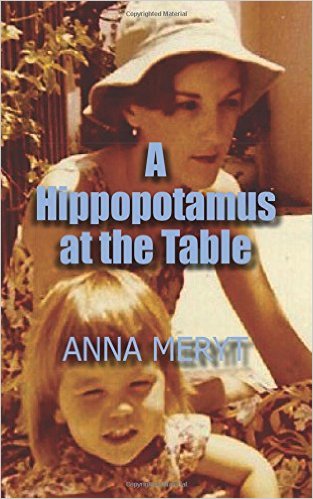
The other Greenacre Writer is Anna Meryt who has published her memoir A Hippopotamus at the Table. I think I'd be tempted to pick it up from the title alone - although its origin wasn't what I was expecting - and if you'd like to learn more about that, take a look at this interview.
  
Anna was originally in GW's memoir and autobiography group co-ordinated by Rosie. I wasn't a member of this group so didn't see Anna's work until she switched to one of the Finish That Novel groups when the memoir group closed. I do however remember reading the first couple of chapters and thinking 'I want to read more.' She recalls her travels in South Africa with her husband and Pascale their eighteen month old daughter in the early 70s when apartheid was rampant. For more information take a look at Anna's blog.

The third author was one of our guest readers at Finchley Literary Festival. Although Irenosen Okojie had only a ten minute reading slot, I was immediately impressed with the vitality of the extract from her debut novel Butterfly Fish. I'm not alone as it is, rightly so, attracting a great deal of attention. For a little more, see my blogpost on the festival about this exciting new author: Irenosen Okojie.


Last but not least is a writer who I 'met' online. I first read some of Joanna Campbell's work when she entered the Greenacre Writers short story competition. Her stories struck me as very original, with a well developed wry humour. I followed Joanna's writing blog and with it the progress of her novel, Tying Down the Lion, which was published this month. The Bishop family drive across Europe in 1967 in a battered Morris Traveller to Berlin divided by The Wall. Grandma, who knows what makes the world go round, blames a lot of the world's problems on the fact that Hitler was a vegetablarian. Take a look at Joanna's website.

As I congratulate these new authors, I know how much hard work went into their successes, and that makes me feel more determined to get my head down and get on with my own writing, much neglected lately. To cheer me on I'm pleased to say I received some very good feedback on my re-write of my WIP's first three chapters.

Sunday, 5 July 2015

Travels with books

Just a few book things I've spotted on my travels.   

This little library in Luang Prabang, Laos, also provides book for outlying villages, including those serviced by Laos' two library boats. This is not a luxury but a necessity as many small villages are poor and have no books even in the schools. Visitors can support The Language Project in Laos by buying books for the library, but you can still support them from home The Language Project.


Book crossing has been going on for years under the name of swapping books, but that was generally with people you met face to face. On my travels overland to India so many years ago, we had to travel light (rucksacks were the order of the day; wheeled suitcases didn't exist) and so the books we took were exchanged along the way with other travellers. Now Bookcrossing has become established and it is the books which travel. You release books in the wild and they are captured by other readers and then as often as not released again and so on. It has become especially popular in other countries and I saw this Bookcrossing arch in Wroclaw Station in Poland recently.


Wherever I go if I spot a bookshop I have a look around, even if I can't read the titles because of the language difference. I spot many familiar author names but very often have to guess the titles because covers are often different when a title is published for the overseas market. This bookshop cat lives in a shop in Istanbul. He had plenty of books to sit on and there were lots of customers too to make a bit of a fuss of him.


Not all bookshops have much to sell. This bookshop in Santiago in Cuba back in 2008 had only a few tattered second-hand books for sale,
as books were a relatively rare commodity, with only books approved by Fidel Castro's regime deemed fit for reading. How many of this bookshops were contraband, I don't know, but tourists would often leave books they had brought. I only wished I had some I could offer but coming  upon this shop by accident I had none with me. Things have changed for the better since then and I wonder if this little shop still exists.


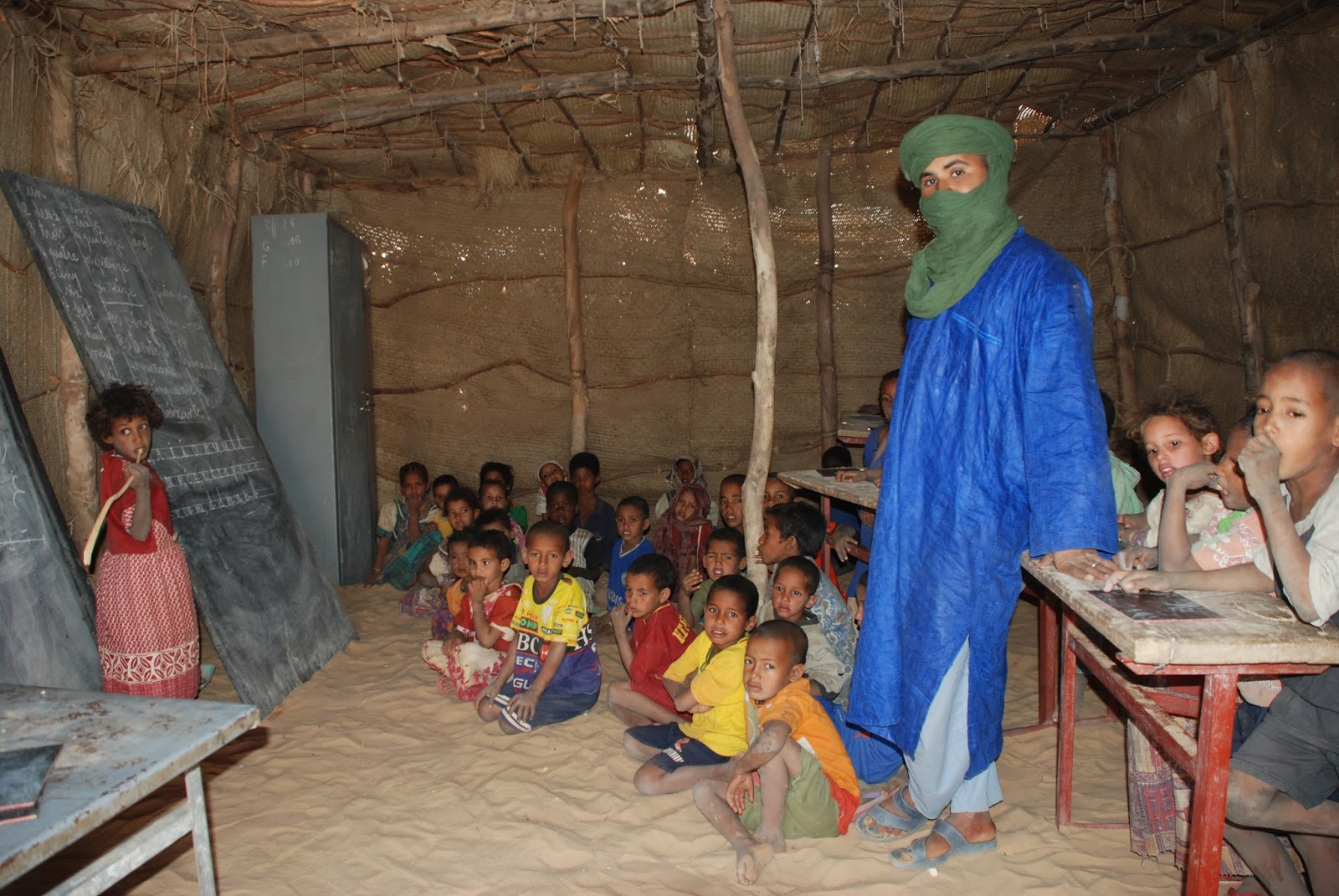
Sometimes, even second-hand books are hard to come by and this school for Tuareg children in Timbuktu in 2007 had very few. Those that they did have were for the older children while the younger ones learnt from a blackboard. The desks in this class were for the middle grade children who also had blackboard slates whilst the smallest sat in the sand and took it in turns to use the large board. Chalk was as precious as books. Wren Miller saw much the same picture and as a result set up Send a Book to Mali.